
31 JUL 2025 | New Delhi
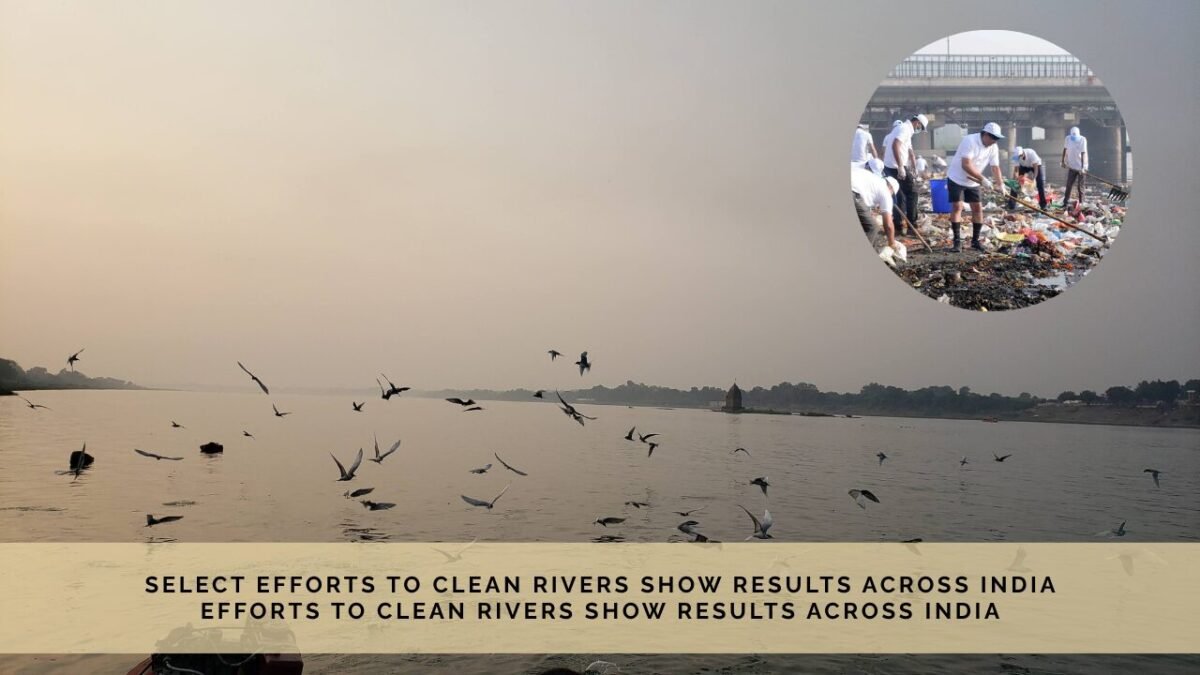
The Central Government has informed that river cleaning efforts under various national programs are showing positive results, with polluted river stretches reducing and water quality improving, especially in the Ganga River.
According to the Minister of State for Jal Shakti, Shri Raj Bhushan Choudhary, cleaning rivers is mainly the responsibility of States, Union Territories, and local bodies. However, the Central Government is also supporting them through several key programs.
Namami Gange Program
The Namami Gange Program, which focuses on the rejuvenation of the Ganga and its tributaries, is the largest river-cleaning initiative in the country.
- 212 projects have been taken up, including laying 5220 km of sewer network and building 6540 million litres per day (MLD) sewage treatment capacity.
- So far, 136 projects have been completed, creating or upgrading 3781 MLD of sewage treatment capacity.
- Around ₹20,000 crore has been spent under the program, with ₹10,500 crore used in the last 5 years.
National River Conservation Plan (NRCP)
Under NRCP,
- 57 rivers in 17 states have been covered.
- 2945 MLD sewage treatment capacity has been created.
- The government released ₹1677 crore in the last 5 years for the scheme.
Other Supporting Schemes
Schemes like AMRUT, Smart Cities Mission, and Swachh Bharat Mission (Urban) also help by improving sewerage and sanitation infrastructure in cities, which indirectly improves river health.
Visible Results
As per the 2022 report of the Central Pollution Control Board (CPCB):
- Polluted river stretches have reduced from 351 in 2018 to 311 in 2022.
- 106 stretches are now no longer polluted, and 74 stretches have shown noticeable improvement.
- In river Ganga, Dissolved Oxygen levels are within safe limits, supporting river life. The increased presence of dolphins in new stretches of the river is a positive sign of ecological recovery.
Legal and Monitoring Efforts
The Environment Protection Rules, 1986, require treatment of waste before discharge. As directed by the National Green Tribunal, all States and UTs have prepared action plans to restore polluted rivers, which are regularly monitored at both State and Central levels.
Source: PIB | This information was provided by Shri Raj Bhushan Choudhary, Minister of State for Jal Shakti, in a written reply in the Lok Sabha today.
