
30 July 2025 | New Delhi
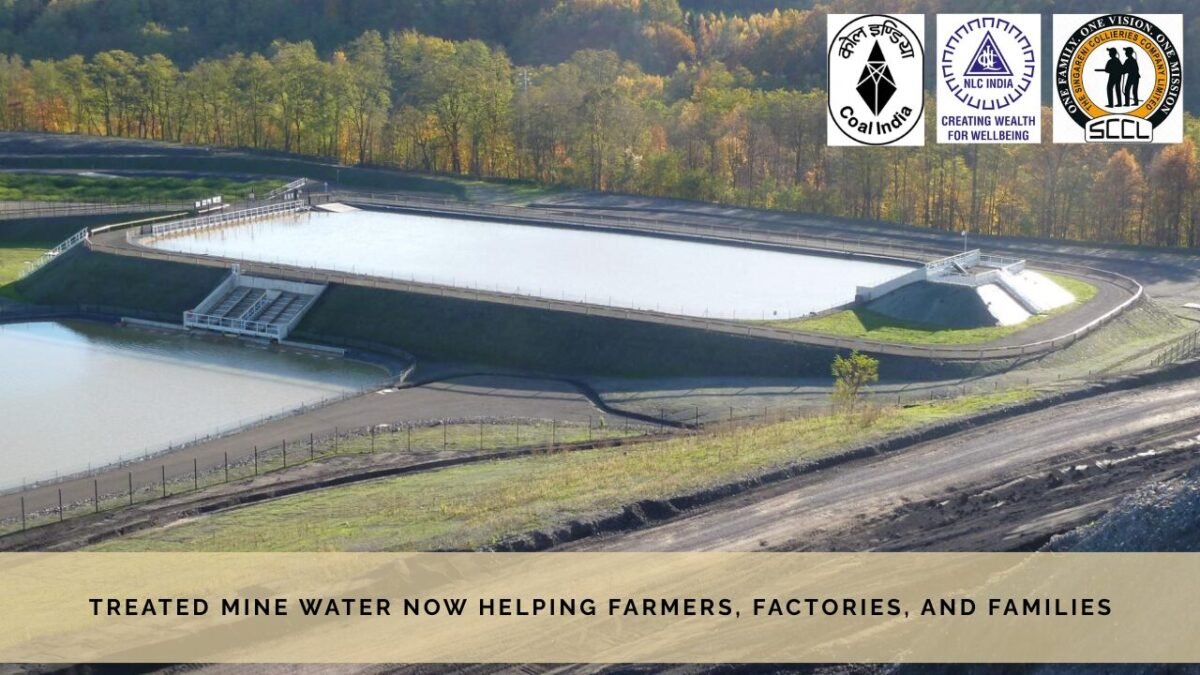
In a strong move to save water and protect the environment, the Ministry of Coal is now promoting the safe and smart use of treated mine water. This treated water is being used for drinking, farming (irrigation), and industrial work in various coal-mining areas of India.
The announcement was made in the Lok Sabha by Shri G. Kishan Reddy, Union Minister of Coal and Mines. He said that companies like Coal India Limited (CIL), NLC India Limited (NLCIL), and Singareni Collieries Company Limited (SCCL) are already working on these water-saving projects in many mining states.
What is Treated Mine Water?
When coal is mined from deep underground, water often fills the empty spaces. This water is called mine water. If left untreated, it can be dirty or harmful to health and nature. But with proper treatment—like filtering, cleaning, and disinfecting—this water can become safe for use.
The Ministry and coal companies have started treating this water so that it doesn’t go to waste. The clean, treated water is then used in nearby villages, farms, and factories, especially in dry areas where fresh water is limited.
Safe and Clean for Drinking
To make sure the treated water is safe for drinking, it is regularly tested in labs that follow rules set by the Bureau of Indian Standards (BIS) and the Central Ground Water Authority (CGWA). The water goes through several processes like sedimentation (removing dirt), filtration (removing particles), and disinfection (killing germs) before it is given to people.
Only when the water meets the health and safety standards is it allowed to be used for drinking.
Helping Farmers and the Environment
Apart from drinking, a large part of the clean mine water is being used for irrigation—helping farmers water their crops. In many mining states, groundwater levels are low, and rivers are seasonal. This makes treated mine water a valuable alternative source for agriculture.
Using treated water for farming also helps conserve natural freshwater, which can then be saved for drinking and household use. This reduces the pressure on rivers, lakes, and groundwater.
Support for Industry Too
Industries, especially those near mining areas, often require large amounts of water for their work. Treated mine water is also being supplied to them, which helps in reducing the use of fresh water from public sources. It is a smart way to recycle water and support local economic activities.
Strict Rules and Monitoring
The use of mine water is carefully regulated. The Environmental Protection Act (1986) and the Water (Prevention and Control of Pollution) Act (1974) provide the rules for safe water use. Guidelines from the Central Pollution Control Board (CPCB) and State Pollution Control Boards (SPCBs) are also followed.
To make sure everything is done properly, coal and lignite companies have their own standard operating procedures. These include how to treat, store, test, and distribute the water safely.
Reaching More States and People
The Ministry of Coal is planning to expand these water projects to all coal and lignite mining states. This includes states like Jharkhand, Odisha, Chhattisgarh, Madhya Pradesh, Maharashtra, and Telangana, where coal mining is common and water scarcity is also a big issue.
Many new projects are being started to use the extra mine water for the benefit of local people and the environment.
In a country like India, where many places face water shortages, using treated mine water is a big step toward smart water management. It is helping people in villages, supporting farmers, reducing industrial demand for fresh water, and protecting the environment. What was once a waste product from coal mines is now becoming a lifeline for nearby communities.
With strong monitoring, scientific treatment, and community support, India’s coal sector is showing how technology and planning can turn problems into solutions.
Source: PIB
