
ROURKELA, AUG 27
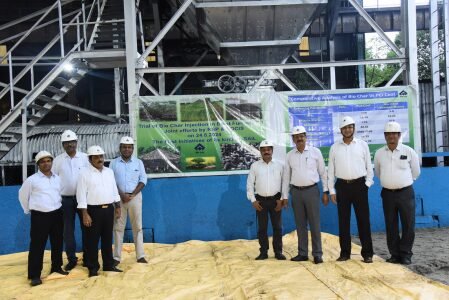
In a groundbreaking move towards reducing carbon emissions in steel production, Rourkela Steel Plant (RSP), in collaboration with SAIL and RDCIS, has successfully initiated the use of Biochar in Blast Furnace #1. On August 24, 2024, Atanu Bhowmick, Director In-Charge of RSP, charged the first batch of biochar during the historic trial. The event was attended by SR Suryawanshi, ED (Works); Tarun Misra, ED (HR); Sandip Kumar Kar, ED (RDCIS); Alok Verma, ED (Mines); AK Behuria, ED (F&A); along with Chief General Managers and senior officials from RSP and RDCIS.
Bhowmick expressed pride in the milestone, stating, “We are proud to be at the forefront of this transformative initiative within SAIL. By integrating Biochar into our operations, we are making significant strides towards reducing our carbon footprint and reinforcing our commitment to sustainable development.” He also urged the Blast Furnace team to adhere to all safety protocols.
Suryawanshi emphasized the importance of this initiative in advancing the plant’s goal of achieving carbon neutrality. Sandip Kar provided an overview of the Biochar injection process and its benefits for Blast Furnaces.
SAIL’s exploration of biochar, a stable form of carbon derived from biomass through pyrolysis, represents a forward-looking approach to reducing CO2 emissions. This process involves thermally decomposing biomass — such as babool and bamboo — in the absence of oxygen to produce biochar. This material can partially replace traditional Pulverized Coal Injection (PCI) coal in blast furnaces. Laboratory studies and trials by RDCIS have identified babool and bamboo-based biochar as viable alternatives to PCI coal. These materials, derived from fast-growing, CO2-absorbing plants, are considered carbon neutral and are plentiful in various regions of India.
The successful trial of this technology is a collaborative achievement involving teams from RDCIS and the Blast Furnaces at RSP.
