
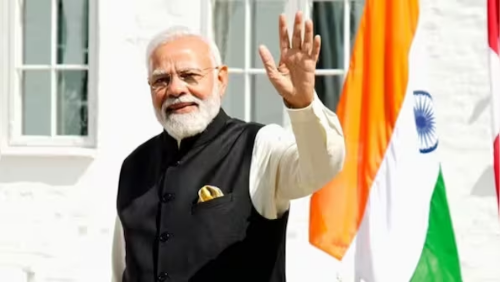
On Sunday at the India Agricultural Research Institute in the nation’s capital, Prime Minister Narendra Modi will deliver the seeds of 109 high-yielding, climate-resilient, and biofortified crop types. He will also engage in conversations with farmers and experts.
A PMO statement released on Saturday states that seeds for these 109 kinds will be used for 61 crops, comprising 27 horticultural and 34 field crops.
The seeds of a variety of cereals, such as millets, oilseeds, pulses, sugarcane, cotton, fiber, and other prospective crops, will be released among the field crops.
According to the PMO, seeds of various fruits, vegetables, tuber crops, plantation crops, spices, flowers, and medicinal crops will be disseminated among the horticulture crops.
The Prime Minister has consistently promoted the use of climate-resilient techniques and sustainable farming.
In order to eradicate malnutrition in India, he has also placed a strong emphasis on promoting biofortified crop types by tying them into a number of government initiatives including Anganwadi and Mid-Day Meal.
The official statement further stated that the prime minister has emphasized how these actions will guarantee farmers a healthy income and provide them with new business opportunities.
In light of the challenge faced by climate change, Prime Minister Modi stated on Saturday that India has evolved as a food surplus nation with a strong agriculture sector and was prepared to share its experience to assist solve the world problem of hunger and malnutrition.
At the 32nd International Conference of Agricultural Economists (ICAE), which took place in New Delhi last week and involved 75 countries, Prime Minister Modi stated that India has created up to 1,900 new seed varieties for various crops that are climate-resilient, benefiting the nation’s farmers. One of these varieties is rice, which requires 25% less water.
He said that India has created a pantry of “super foods” like millets and black rice that it was prepared to share with the rest of the world, particularly for the benefit of the Global South.
He clarified that black rice, which is grown in northeastern states like Manipur and Assam, has therapeutic value and has the potential to generate significant profits for farmers.
Similar to this, India is now the world’s top producer of millets, a superfood farmed according to the “minimum water and maximum production” philosophy that will aid in the fight against world hunger.
He noted that the UN had declared 2023 to be the “Year of the Millet,” highlighting the potential of millet.
