
30 July 2025 | New Delhi
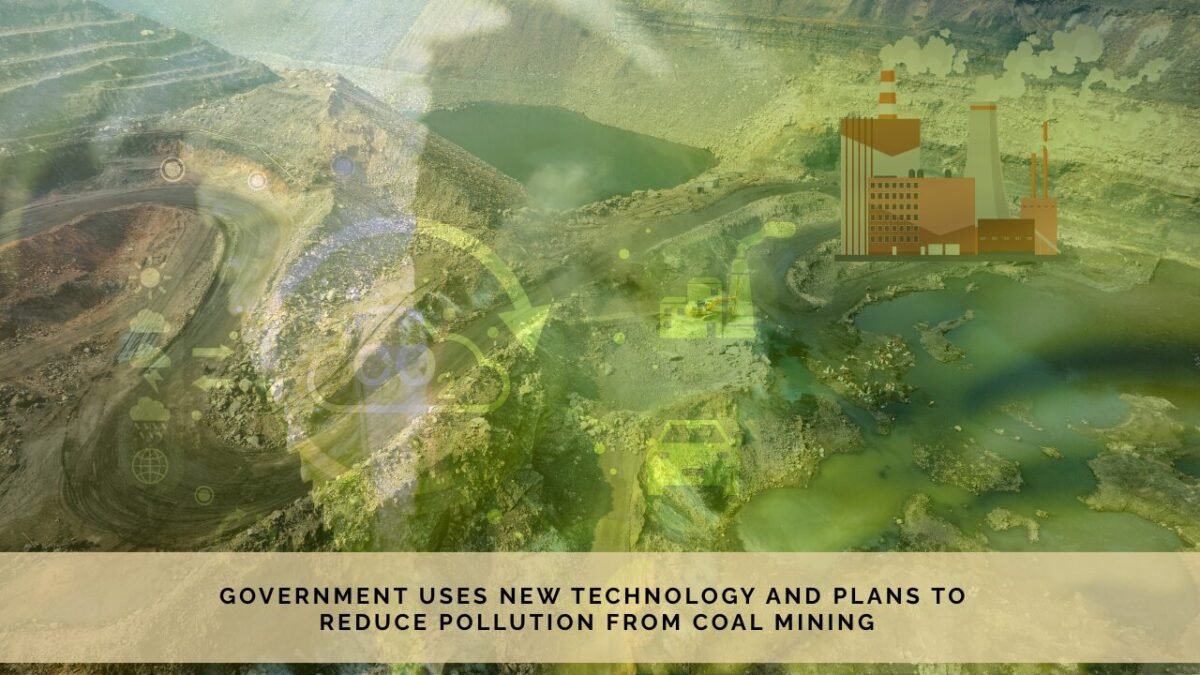
The Government of India is taking many steps to reduce pollution caused by coal mining and coal-based power plants. Coal is an important source of energy in our country, but mining it can harm the environment. That is why all coal mining activities must follow proper rules and clearances before they begin.
Every mining company must get permissions such as Environmental Clearance (EC), Forest Clearance (if needed), Consent to Operate, and Groundwater Clearance. These are checked and approved by the Ministry of Environment, Forest and Climate Change (MoEF&CC) and Pollution Control Boards. Regular reports must be submitted to show that the companies are following the rules.
Before giving permission, experts study how the project will affect the air, water, land, forests, and animals in the area. This is done through something called the Environmental Impact Assessment (EIA). After studying the report, they make a plan to reduce the damage, known as the Environmental Management Plan (EMP). The Mine Plan also includes how the land will be restored after mining is over. Only after all these checks are done, permission is given to start mining.
For coal-fired power plants too, new technologies and strict rules have been introduced. These help to reduce pollution in the air, water, and soil. The government wants all companies to follow clean and responsible ways of producing power.
The government also cares about what happens after a mine closes. On 31 January 2025, new rules were made to help people and the environment when mining ends. These rules say that companies must help train local people, give them jobs, restore the land, protect nature, and involve the local community in development after mining.
In states like Jharkhand and Odisha, companies like Coal India Limited (CIL), NTPC, and Damodar Valley Corporation (DVC) are working on CSR (Corporate Social Responsibility) projects. These include teaching new skills and helping people in mining areas earn a better living.
At the same time, the government is not planning to shut down coal mines that are working. Instead, it is supporting cleaner methods like coal gasification. This is a process where coal is turned into gas, which is less polluting and can be used for many industrial purposes.
To promote coal and lignite gasification, the government has introduced several plans:
- An incentive scheme worth ₹8,500 crore has been launched to support coal gasification projects by both private and public sector companies.
- A new section called “Production of Syngas” has been added to the coal auction rules to support this clean method.
- Coal supply for gasification projects will be offered at a lower price for the next 7 years.
- Companies that use at least 10% of their mined coal for gasification will get a 50% discount in revenue share during coal block auctions.
- Rules have also been relaxed for technology transfer from neighbouring countries to help introduce modern gasification methods.
The government is also working closely with state governments and local communities to make mining more environment-friendly and people-friendly. Here’s how:
- Land needed for mining is acquired only after talking with local people. Their concerns are heard and addressed.
- When mining is over, the land is restored properly with trees and plants. Some areas are turned into eco-parks, water bodies, or tourist spots like Saoner Eco Park and Gunjan Park.
- Tree plantation is done on a large scale, and saplings are given to nearby villages to increase greenery.
- Empty mine pits are turned into ponds or lakes, which can be used for irrigation, drinking water, or fish farming.
These steps not only help nature but also create new ways for people to earn money after mining ends.
This information was shared by the Union Minister of Coal and Mines, Shri G. Kishan Reddy, in a written reply in the Lok Sabha today.
Source: PIB
