
05 AUG 2025, New Delhi
The Government of India has taken major steps to make the LPG (cooking gas) distribution and subsidy system more transparent, efficient, and fair. On August 5, 2025, Petroleum Minister Hardeep Singh Puri shared details in the Rajya Sabha about reforms made to stop misuse and ensure that only genuine consumers receive LPG subsidies.
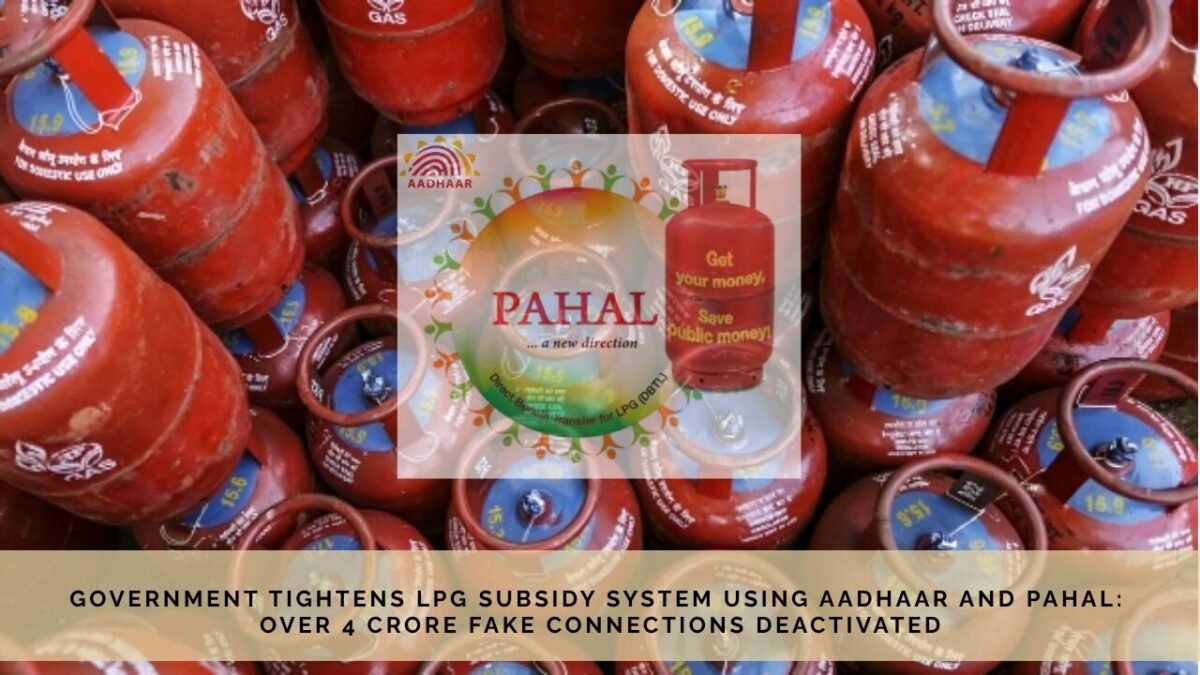
PAHAL Scheme and Direct Benefit Transfer (DBT)
The PAHAL (Pratyaksh Hanstantrit Labh) Scheme, launched in 2015, allows LPG customers to get subsidies directly in their bank accounts. LPG is sold at the full price, and after delivery, the subsidy amount is sent to the consumer’s bank account. Consumers also get SMS alerts to track the process.
This system has helped stop fraud, including:
- Fake accounts
- Duplicate connections
- Diversion of LPG for commercial use
As of July 1, 2025, over 4.08 crore fake, inactive, or duplicate LPG connections have been deactivated.
Use of Aadhaar and Biometric Authentication
To make the system stronger, the government linked LPG accounts with Aadhaar numbers and started a biometric verification process.
- 67% of existing PMUY (Pradhan Mantri Ujjwala Yojana) beneficiaries have completed biometric Aadhaar verification.
- All new PMUY connections are now given only after this step.
- As of now, 92.44% of active LPG users have Aadhaar linked to their LPG accounts, and 86.78% are Aadhaar Transfer Compliant.
This ensures that subsidies are sent only to real and eligible people.
Cleaning the System: Removal of Inactive or Ineligible Connections
To ensure that benefits go only to needy families, the government regularly removes inactive or non-eligible PMUY beneficiaries.
- 8.49 lakh PMUY connections have been terminated so far.
- In January 2025, a new rule was introduced to remove users who never refilled their LPG cylinders after getting the first one. Around 12,000 such connections were removed.
Better Service Through Technology
The government has introduced new services to help consumers:
- IVRS/SMS system for refill booking and delivery updates.
- Consumers now receive SMS at every stage booking, cash memo creation, and delivery.
- A Delivery Authentication Code (DAC) is sent to customers and must be shared with the delivery person to avoid fake deliveries.
These steps have improved transparency and helped consumers track their LPG use.
Surprise Inspections and Anti-Fraud Measures
To stop misuse, the Oil Marketing Companies (OMCs) and government officers conduct:
- Regular and surprise inspections at LPG distributors’ showrooms and godowns.
- Random checks during delivery routes.
- Monitoring by departments like the Anti-Adulteration Cell and Vigilance teams.
Strict action is taken against LPG distributors who are caught doing malpractice.
Study Confirms High Satisfaction
A third-party study by the Research and Development Initiative (RDI) found that:
- Over 90% of people were happy with the way they received their subsidy.
- It recommended focusing on better grievance handling, targeted subsidies, and safety awareness campaigns.
Very Few Complaints Despite High Usage
In 2024–25, around 194 crore LPG refills were delivered. Only 0.08% complaints were received, mainly for delay or subsidy-related issues showing the system works well.
Grievance Redressal Options for Consumers
If consumers have problems, they can file complaints through:
- Toll-Free Helpline: 1800 2333 555
- OMC websites or apps
- CPGRAMS (government complaint portal)
- Social media and WhatsApp
- LPG accident helpline: 1906
- Direct complaint at distributor office
These reforms show the government’s serious efforts to protect subsidies, improve delivery, and empower consumers, especially under schemes like Ujjwala Yojana.
Source: PIB
